
The tropical rainforests of Sabah operate on a difficult calendar. The towering dipterocarp trees that make up the canopy fruit together in massive events every few years. When they do, food is everywhere. For the long years in between, the forest drops into a famine. The animals survive this because of a single genus of plant. Borneo holds around 150 wild fig species out of a global total of about 750. These figs fruit asynchronously. On any given day of the year a scattered handful of trees will hold ripe fruit.
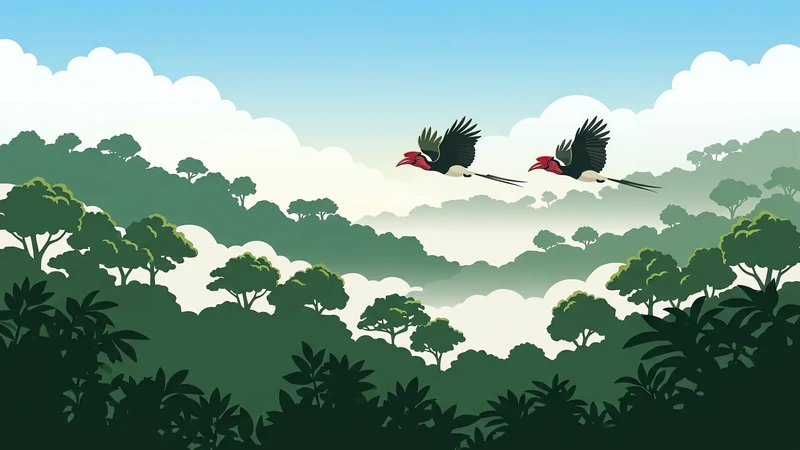
This staggered rhythm makes the wild fig the cornerstone of the rainforest. When an orangutan cannot find anything else to eat, it shifts its diet to figs. For a photographer, an actively fruiting canopy fig is the most valuable asset in the forest. Under the right tree, keep an eye out for hornbills in the morning and flying squirrels after dark.
"Because the animals have to come to the tree, the guides come to the tree too."
Fruiting canopy trees
Sabah's wildlife does not spread itself evenly across the map. Animals gather where the food is. During the years between the great dipterocarp fruiting events, a single large fig tree might be the only major food source for square kilometres. Researchers have tracked exactly how heavily the animals rely on these trees. Figs make up more than a fifth of the orangutan diet at Danum.
Because the animals have to come to the tree, the guides come to the tree too. A canopy strangler might ripen hundreds of thousands of figs at once. The crop triggers a feeding rush that can strip the branches bare in 5 to 14 days. During that window, the tree is a beacon.

Photographing wildlife at figs
A fruiting fig offers the best photography conditions in the rainforest. Instead of tracking erratic monkeys through thick brush in low light, you have a controlled environment. Set up a heavy tripod and identify an exposed cluster of ripe figs against a clean background. Pre-focus your telephoto lens on that spot.
The rainforest canopy intercepts most of the sunlight and leaves the understorey in a permanent emerald shadow. You need a fast lens to recover light. A 400mm f/2.8 or a 70 to 200mm f/2.8 zoom is ideal. Spot metre on the animal's face. This is essential for heavily backlit subjects like orangutans.