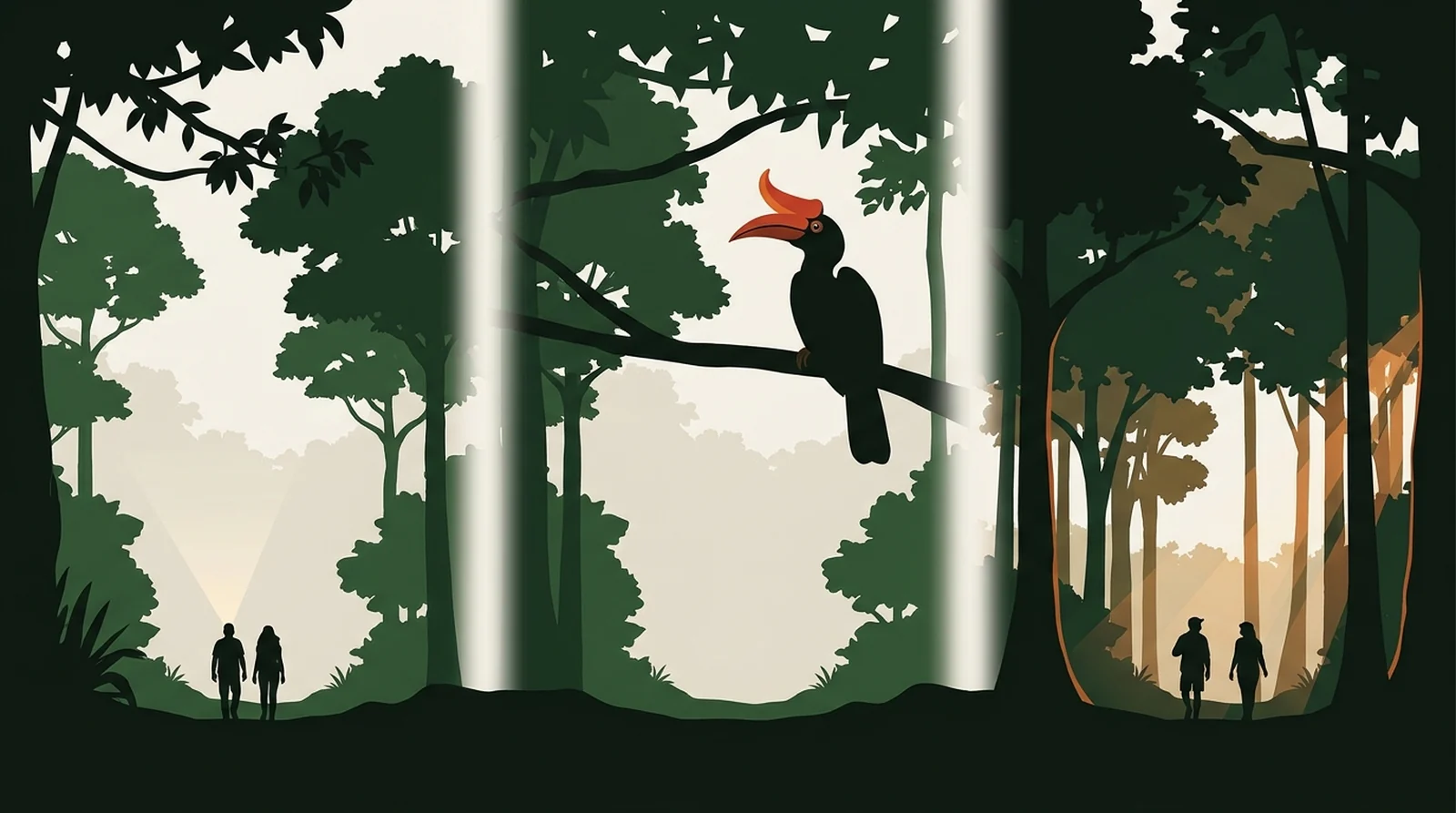
The daily rainforest rhythm
How a Birding Day Runs at Danum Valley
A typical day of birding in Danum Valley starts before dawn and breaks for the midday heat. Here is how the lodges structure the hours and what you can expect on the trails.
The bird
The daily birding rhythm
2.5 hours from Lahad Datu, this 438-square-kilometre lowland rainforest harbours over 320 recorded bird species. The daily schedule starts before dawn to look for terrestrial endemics and pauses during the midday heat. Depending on where you stay, canopy birding takes you onto a suspended walkway or to rigid observation structures.
Every visitor entering Danum Valley does so on a conservation-area permit arranged with their stay and travel and health insurance that includes emergency evacuation is sensible in a place this remote. The lodges understand exactly why you are here and they build the meals around your time in the forest. You will not miss breakfast because you are tracking a pitta at sunrise. The rhythm relies on finding the birds while they are active and taking cover when the heat pushes them deep into the shade. If you do the canopy walkway on your first morning you'll have the rest of the stay for the trails.
Birding before dawn
Because of the equatorial latitude the dawn breaks consistently between 5:40am and 6:10am all year round. The astronomical twilight starts around 4:51am and that is when you want to be awake. The air is cool and the resident birds begin their morning choruses. The forest floor remains profoundly dark until about 7:30am so listening leads the way in this early window. Specialist birding guides know an extensive range of calls and will track wren-babblers and trogons by ear long before you can see them. It is the best time to locate cooperative breeding flocks before they move high into the canopy.
The primary trails
As the light reaches the understory you move onto the primary trails. The terrain here suits people who are steady on their feet as the paths are steep, muddy and frequently crossed by thick roots. The terrestrial jewels of Borneo live in this dark environment. The blue-headed pitta and the black-crowned pitta are Bornean endemics and reliable residents along these lowland trails. Finding them requires absolute silence and patience. The guide will listen for their calls and position you carefully. You will often stand still for long periods while waiting for an elusive ground-cuckoo or partridge to step into a clearing.
Canopy walkways and towers
By mid-morning the focus shifts upward. The rhinoceros hornbill is a vulnerable species but a highly realistic target here and you will often hear its resonant call echoing across the valley. Bushy-crested hornbills travel in noisy flocks of 5 to 15 birds and are highly visible from the access roads and riverine edges. For the canopy you have 2 distinct approaches depending on where you stay. The Danum Valley Study Centre is a working research station with a cafeteria and rigid observation structures although the Bukit Atur platform is undergoing maintenance. Borneo Rainforest Lodge has a 300-metre canopy walkway suspended 26 metres above the forest floor. The Bornean bristlehead travels the canopy in fast-moving family flocks and intercepting them from a walkway places you closer to eye level.
Lunch and midday rest
As midday approaches the equatorial heat builds and the avian activity plummets. Guides build a break into this quiet stretch of the day. You return to your accommodation for lunch and a shower. Borneo Rainforest Lodge stands on the bank of the Danum River with 31 chalets and villas spread along boardwalks under the trees. A construction and expansion project runs 1 January 2025 to 22 January 2027 adding 9 chalets; a riverside dip pool and gym were added in December 2024 and the forest remains right at your veranda rail. This quiet window is the time to recharge camera batteries, back up memory cards and sleep.
Rain and afternoon birding
Sabah has no single dry season and rain falls all year. The green season runs roughly from November to February and it brings heavy predictable afternoon rain. This is not a reason to stay away. The trails become muddy and leech activity peaks but the immediate post-rain windows trigger explosive foraging activity in the canopy as insect life emerges. The late afternoon is a productive time to walk the access road and the mature secondary edges. The black hornbill shows a tolerance for these edges and is frequently encountered foraging in the mid-canopy during this window. The wrinkled hornbill is less vocal but you can track it by the loud sound of its wingbeats overhead.
Night drives and guided walks
As the light fades the nocturnal species become active. Night drives and guided walks are part of the daily routine. The guides use spotlights to sweep the canopy and the understory for owls and frogmouths. Be sure to ask your guide to use brief sweeps of the light so they do not disrupt the birds' night vision. The sounds of the forest change completely and the cooler air makes walking comfortable again. The open roads allow clear views into the lower branches where nocturnal birds hunt for large insects.
Camera equipment and clothing
You need specific gear to handle the environment. The forest floor is dark even at noon so photographers require fast prime lenses and camera bodies capable of clean images at high ISO settings. Keep the flash off near sensitive display sites. Dark clothing is essential to avoid flushing shy terrestrial birds. Leech socks are necessary all year round. The humidity is intense so dry bags for your equipment are just as important as your binoculars. A lightweight waterproof layer will protect you during sudden afternoon downpours.
Photography through the day
Photographers plan their day around the light and a steady camera position. The suspended walkway at Borneo Rainforest Lodge moves underfoot so it suits handheld photography at faster shutter speeds. For rigid tripod-friendly facilities the towers at the Study Centre are the better fit. Borneo Rainforest Lodge completed 2 purpose-built ground hides in late 2024. The Danum BOS and Takala BOS hides feature flat dirt floors engineered for tripods, solar-powered ventilation and camouflage viewing ports. The Takala hide sits near an active Great Argus dancing ground where the spectacular display is a realistic target for photographers observing absolute silence.
Planning your birding days
If the endemic species and the deep forest are what you are coming for tell the team which birds matter most and they will build the itinerary around them. Send your travel dates and your party size and the team will come back with a plan that secures the right lodge and a specialist guide for your pace.
--- Sources referenced on this page: eBird (2026), Sabah Parks (2026), Sabah Wildlife Department (2026), IUCN Red List (2026). Facts verified 9 September 2026.
Related
Keep planning
Questions the team is asked
Yes. A general nature guide cannot substitute for a specialist birding guide in Sabah. Tracking elusive species in dense rainforest requires identifying subjects acoustically long before you can see them. Top specialist guides have an extensive mental library of calls and you should book 12 to 18 months ahead to secure one.
No. The green season from November to February brings heavy afternoon rains but the morning birding remains highly productive. The post-rain insect hatches trigger intense feeding frenzies and this period overlaps with the arrival of Palearctic migrants like the blue-winged pitta.
This nomadic species follows unpredictable fruiting events at Danum Valley so a dedicated hide visit in Trusmadi suits a trip focused on photographing it. For a photography trip focused on Bulwer's pheasant, head to the Trusmadi range where dedicated hides maintain reliable feeding stations.
The Borneo Rainforest Lodge canopy walkway is a suspended cable structure that vibrates with movement. The Danum Valley Study Centre has rigid observation structures suited to heavy tripods; the team checks current access when you book because the Bukit Atur platform is undergoing maintenance.
All 8 Bornean hornbills have resident populations within the conservation area. The rhinoceros and bushy-crested hornbills are highly visible while the critically endangered helmeted hornbill is heard regularly and seen with luck. The Oriental pied hornbill is common on the fringes of the reserve.
Plan your trip
Plan your Danum Valley stay
Tell the team your target birds, travel dates and party size so they can plan your lodge and specialist guide.